Avoid Overbuying Gear. Start Smart.
If you’re new to camping, it’s incredibly easy to fall into the “gear trap.” You watch a few videos, scroll through a couple lists, and suddenly it feels like you need a truckload of equipment just to spend one night outdoors. But here’s the truth: you don’t need that much to get started — and you definitely don’t need to spend a fortune.
This guide breaks down the essential gear every beginner actually needs, plus a few things you can skip (at least for now). Starting small not only saves money — it also helps you figure out what you like before you commit to more specialized gear.
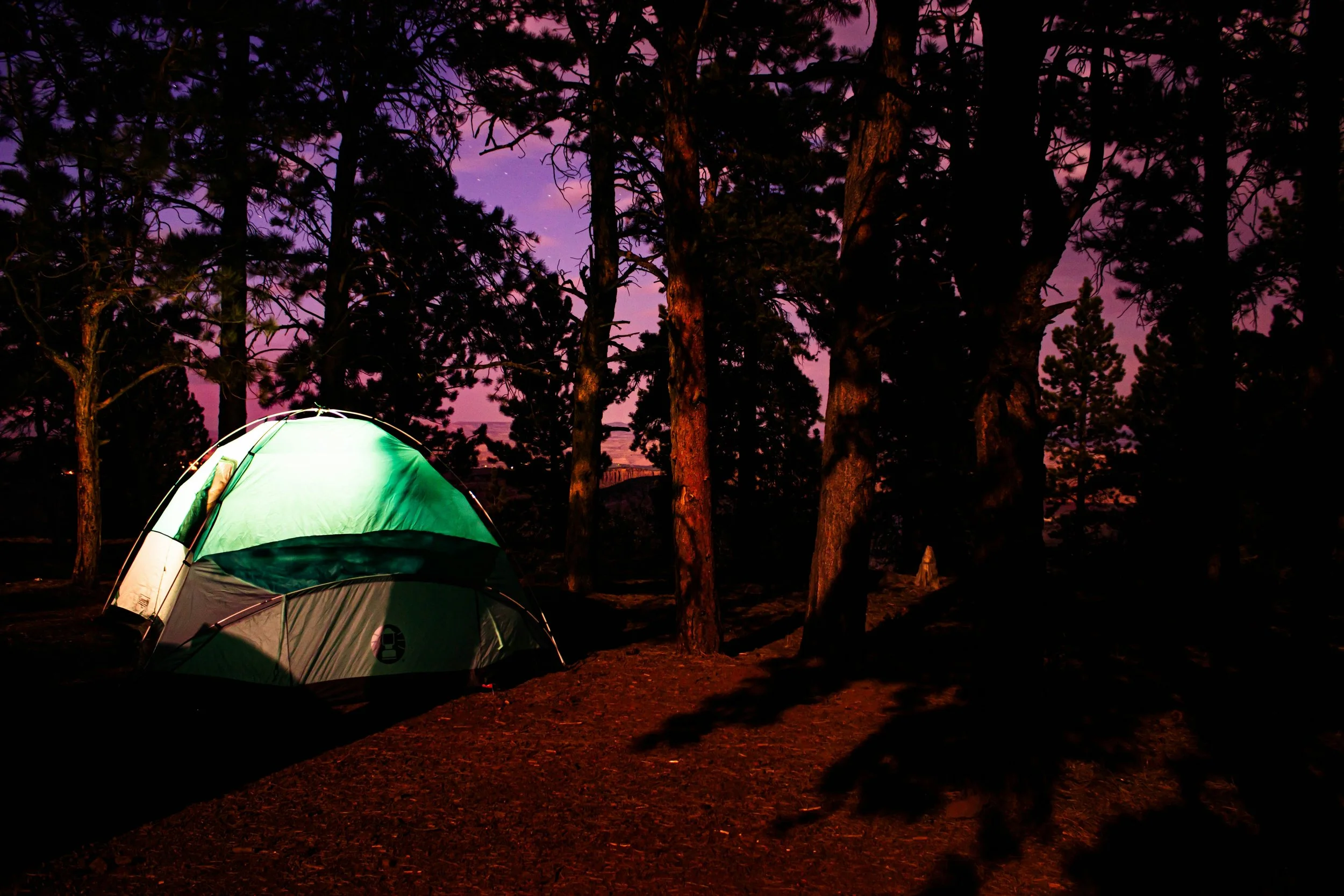
1. A Good Tent (Yes. Just One.)
A tent is one of the only items truly worth investing in early.
What matters most:
Waterproofing
Easy setup
Room for one more person than you think you need
Decent ventilation
For your first couple trips, avoid ultra-light backpacking tents or massive multi-room shelters. A simple, weather-resistant, two- or three-person tent is the perfect starting point.
What you don’t need:
A tent with a complicated pole system
Built-in LED lights
“Instant cabin” tents with too many moving parts
You’re looking for reliable, not fancy.
2. A Sleeping Bag That Matches the Weather
Not all sleeping bags are created equal, and you don’t need four different ones for different seasons. For beginners, look for:
A 30–40°F comfort rating (good for spring through fall in most places)
A synthetic fill (budget-friendly, insulates when wet)
A familiar rectangle shape or a basic mummy bag
You don’t need an ultralight down bag unless you’re backpacking, and you don’t need anything rated for sub-zero temperatures unless you’re camping in the winter (you probably aren’t… yet).
Read more: Sleeping Bags vs. Sleeping Pads: What You Really Need
3. A Sleeping Pad (Don’t Skip This One)
A sleeping pad does two important jobs:
It adds cushion.
It insulates you from the cold ground.
Sleeping directly on the ground — even in a great sleeping bag — is a recipe for a miserable night.
Three beginner-friendly pad options:
Thicker air mattress if you’re car camping
You do not need:
An expensive backpacking pad
A bulky cot or a double-height air mattress
Start simple, then upgrade later if you fall in love with camping.
4. A Headlamp (The Unsung MVP)
A basic headlamp instantly makes camping easier. Hands-free light helps with:
Cooking
Finding your way around at night
Getting in/out of the tent
Midnight bathroom runs
Don’t worry about lumens or special modes. A simple, reliable headlamp with a few brightness settings is all you need.
Skip for now:
Wearable lanterns
High-end rechargeable tactical lights
Giant propane lanterns
A headlamp + a small, inexpensive lantern is the perfect beginner combo.
5. A Basic Cooking Setup (Keep It Simple)
Your first few meals outdoors don’t need to be gourmet. Stick with:
One small camp stove
One pot
One pan (maybe)
A spatula or spoon
A lighter
A small cutting board
Reusable water bottle or jug
You don’t need:
A camp kitchen table
A full cookware set
Specialty tools
A giant cooler with wheels the size of tractor tires
Simple meals > complicated gear.
Read more: Campfire Cooking 101: Easy Meals for First-Time Campers
6. Weather-Appropriate Clothing
You don’t need technical outdoor apparel for your first trip. You probably already own what you need:
Comfortable layers
A warm jacket
A rain jacket
Hat + socks
Save your money for actual gear — not clothing designed for extreme conditions that you won’t encounter right away.
7. Safety Basics (A Mini Kit Will Do)
A small first aid kit, sunscreen, bug spray, and a map are plenty for most beginner-friendly campgrounds. Many first aid kits are overstuffed with gear you’ll never use. Start with a compact one and add items as needed.
Read more: How to Build a Basic First Aid Kit for Camping
8. What You Really Don’t Need (Yet)
Let’s save you some money. Beginners usually don’t need:
Multi-room tents
Portable showers
Power stations
Fancy water filters (clean campgrounds already provide water)
Specialized knives or axes
A hammock (fun but optional)
Camp furniture beyond a chair
Only buy what solves a real problem you’re actually facing.
Final Thoughts
Starting camping should feel exciting — not overwhelming or expensive. Begin with the basics:
✔ Tent
✔ Sleeping bag
✔ Sleeping pad
✔ Headlamp
✔ Simple cooking setup
✔ Weather-ready clothing
Then add gear slowly as you learn what matters most to you. You’ll camp smarter, spend less, and enjoy your time outdoors even more.
Happy camping,
JP